How many tourists visit South Korea each year? More than ever: on 12 November 2026, Korea welcomed its 20 millionth foreign visitor of the year, the first time annual arrivals have ever reached 20 million. The previous record, 18.94 million, was only set in 2025.
Korea’s Ministry of Culture, Sports and Tourism announced the milestone 14 years after the country first passed 10 million visitors in 2012. Below are the numbers year by year, where visitors are coming from, why so many people want to come, and what it means if you’re planning a trip.
Short on time? Here’s Korea’s record year in under a minute, from the numbers to the crowds:
Affiliate Disclaimer: This site contains affiliate links and I may earn commission for purchases made after clicking these links.
Korea Passes 20 Million Foreign Visitors For The First Time
The 20 million figure is the ministry’s estimate. Provisional data put arrivals at 19.97 million up to 11 November, and with an average of about 64,000 visitors a day this year, the ministry estimated the 20 million mark was passed on 12 November, Korea JoongAng Daily reported.
2026 had already broken the old record on 27 October, with two months of the year still to go (Korea.net). The government’s target for the whole year is 23 million visitors.
Visitors are also spending more. According to the ministry, foreign visitors spent 15.94 trillion won in the tourism sector from January to September 2026, 47.7% more than in the same period of 2025 (Kyunghyang Shinmun, in Korean).
How Many Tourists Visit South Korea Each Year?
Here are Korea’s foreign visitor numbers for recent years, from the Ministry of Culture, Sports and Tourism. If you’re looking for people who live here rather than visit, see how many foreigners live in Korea.
| Year | Foreign visitors | Note |
| 2012 | Over 10 million | First year above 10 million |
| 2019 | About 17.5 million | Record before the pandemic |
| 2020 | 2.52 million | Pandemic |
| 2021 | 0.97 million | Pandemic low |
| 2022 | 3.20 million | |
| 2023 | 11.03 million | |
| 2024 | 16.37 million | 93.5% of 2019 |
| 2025 | 18.94 million | New record |
| 2026 | 20 million+ (by 12 November) | New record; target 23 million |
The 2019 figure is approximate: the ministry gave 2024’s 16.37 million as 93.5% of 2019, which works out at about 17.5 million.
By the end of September 2026, 17.11 million visitors had arrived, 21.5% more than in the same period of 2025, and September alone brought 2.06 million (ministry press release).
Where Korea’s Visitors Come From
From January to September 2026, the Greater China region (mainland China, Hong Kong, Macao and Taiwan) made up the largest share of visitors, at 46.3%. Growth was especially high from Taiwan (up 32.4%) and China (up 29.2%), and most other markets also rose by double digits, including Japan (up 16.9%) (Korea.net).
In numbers, that was 5.47 million visitors from mainland China and 3.12 million from Japan over the same nine months (The Korea Herald).
More visitors are also skipping Seoul’s airports. Up to September, 3.24 million foreign visitors arrived through regional airports such as Gimhae (Busan), Jeju, Cheongju and Daegu, up 37.4% and 19.0% of all arrivals. Another 1.58 million (9.2%) came in through seaports including Busan and Jeju, up 14.5% (Korea JoongAng Daily). If you’re thinking of starting your trip in the south, my guides to Busan and a week on Jeju Island in winter are a good place to start.
Why Are So Many Tourists Visiting Korea?
The ministry credits the worldwide spread of K-culture, closer work between government ministries, and the hospitality of Korean people. It also points to measures for visitors: easier immigration procedures, more international flights from regional airports and tougher penalties for overcharging tourists (Kyunghyang Shinmun).
Korea JoongAng Daily reported the ministry’s survey of 27,000 people in 30 countries on the appeal of Korean culture. Korean food (55%) and beauty products (53%) are now as popular abroad as K-pop (54%), dramas (51%) and movies (49%), and 65% said Korean pop culture makes them more likely to buy Korean products and services. I’ve written more about the impact of K-culture around the world.
Planning to visit Korea? These travel essentials will help you plan your trip, get the best deals, and save you time and money before and during your Korean adventure.
Visas & K-ETA: Some travellers to Korea need a Tourist Visa, but most can travel with a Korean Electronic Travel Authorisation (K-ETA). Until the end of 2026, citizens of many countries, including the US, UK, Canada, Australia, Japan and many European countries, don’t need either one.
How To Stay Connected: Pre-order a Korean Sim Card or a WiFi Router to collect on-arrival at Incheon Airport (desks open 24-hours). Alternatively, download a Korean eSIM for you travels.
Where To Stay: For Seoul, I recommend Myeongdong (convenient), Hongdae (cool culture) or Gangnam (shopping). For Busan, Haeundae (Beach) or Seomyeon (Downtown).
Incheon Airport To Seoul: Take the Airport Express (AREX) to Seoul Station or a Limo Bus across Seoul. Book an Incheon Airport Private Transfer and relax to or from the airport.
Korean Tour Operators: Tour companies that have a big presence in Korea include Klook, Trazy, Viator, and Get Your Guide. These sites offer discounted entry tickets for top attractions.
Seoul City Passes: Visit Seoul’s top attractions for free with a Discover Seoul Pass or Go City Seoul Pass. These passes are great for families and couples visiting Seoul – you can save lots.
How To Get Around: For public transport, grab a T-Money Card. Save money on Korea’s high speed trains with a Korea Rail Pass. To see more of Korea, there are many rental car options from Klook, EconomyBookings, and RentalCars.
Travel Money: Use money exchanges near Myeongdong and Hongdae subway stations for the best exchange rates. Order a Wise Card or WOWPASS to pay by card across Korea.
Flights To Korea: I use flight comparison sites such as Expedia and Skyscanner to find the best flights to Korea from any country. Air Asia is a good option for budget flights from Asia.
Travel Insurance: It is important to insure your trips to protect yourself against the unexpected. World Nomad is a specialized travel insurance provider with options for different coverage for travellers from around the world. You can also purchase cover when you are already travelling.
How To Learn Korean: The language course from 90 Day Korean or Korean Class 101 both have well-structured lessons and lots of useful resources to help you learn Korean.
What 20 Million Visitors Means For Your Trip
Is Korea Crowded?
Even the culture minister has warned that if foreign tourist numbers keep rising at this pace, “the capital area will soon be saturated” (The Korea Herald). That’s why the government is pushing visitors towards the regions, with “golden routes” planned around five regional airports: Gimhae, Daegu, Cheongju, Muan and Yangyang.
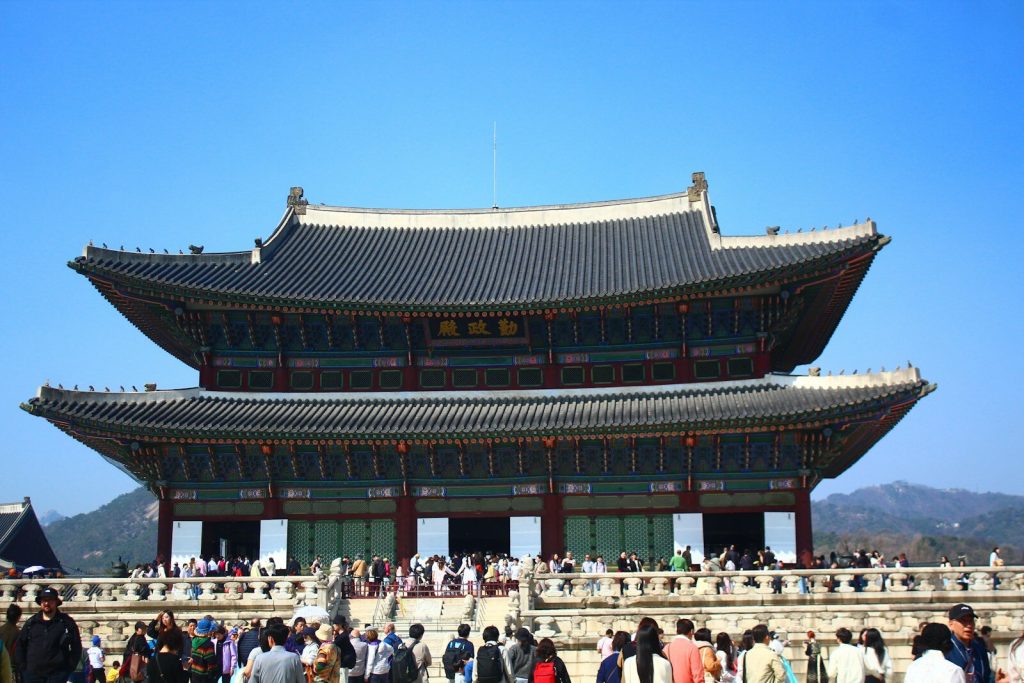
In my experience, the place that really feels it is Hongdae. Go at night or at the weekend and the main streets are packed with tourists, especially in the peak seasons of spring and autumn. Gangnam, Dongdaemun (DDM), Itaewon and Seongsu don’t feel nearly as congested, because those areas are more spread out, whereas in Hongdae everyone squeezes into the same few main streets. If you’re staying in Hongdae, it’s worth exploring in the daytime or on a weekday too.
Tougher Penalties For Overcharging Tourists
Korea has also made the penalties for overcharging tourists much stricter since summer 2026 (Korea JoongAng Daily):
- Taxis: under the new rules, a driver who overcharges gets a 30-day licence suspension for a first offence instead of a warning, 60 days for a second, and loses their licence for a third.
- Hanok stays: from 4 August 2026, operators who don’t post or stick to their price list face a five-day suspension for a first offence, instead of only a warning. Homestays for foreign tourists in cities are now covered too.
- Other accommodation: similar rules took effect in mid-July, with suspensions of 10 and 20 days for repeat offences.
If you’re worried about taxi fares, my guides to getting a taxi in Korea and using Kakao Taxi without a Korean phone number explain how to avoid problems.
Check The Entry Rules Before You Book
The temporary K-ETA exemption for many countries is due to end on 31 December 2026, so if you’re travelling in 2027, read my K-ETA guide before you book. For everything else that has changed for tourists recently, see my Korea travel news page, and for general planning, my South Korea travel guide.
What’s Next: 30 Million Visitors
Minister of Culture, Sports and Tourism Chae Hwi-young called the milestone “the starting point for Korea’s leap” to becoming an “irreplaceable tourism powerhouse”, and said the ministry will work towards 30 million visitors a year and prepare for 40 million (Korea JoongAng Daily). The ministry says it will share the milestone with the public through December.
I’ll update this page with the final 2026 total when it’s published.
FAQs About Korea’s Tourist Numbers
How Many Tourists Visit South Korea Each Year?
South Korea welcomed a record 18.94 million foreign visitors in 2025, and 2026 passed 20 million for the first time on 12 November. The government’s target for 2026 is 23 million.
What Was South Korea’s Previous Tourism Record?
Before 2026, the record was 18.94 million foreign visitors, set in 2025. Before that, the record was about 17.5 million in 2019, before the pandemic.
Which Country Sends The Most Tourists To South Korea?
China. From January to September 2026, 5.47 million visitors came from mainland China and 3.12 million from Japan. The Greater China region made up 46.3% of all visitors.
When Did Korea First Have 10 Million Tourists?
Korea first passed 10 million foreign visitors in a year in 2012. It took 14 years to double that to 20 million in 2026.
Support In My Korea
Thanks for reading. If you want to help me to create more great content in the future, why not buy me a coffee? A strong coffee helps me write more and is a simple way to show gratitude for this free content.


Liked This? Pin It For Others
If you enjoyed reading this article, then please share this with your friends on Pinterest.